Par Ars Antiqua
DEMANDE D'INFORMATIONS

Maîtres anciens, sculptures, mobilier et art moderne
Huile sur toile, 24
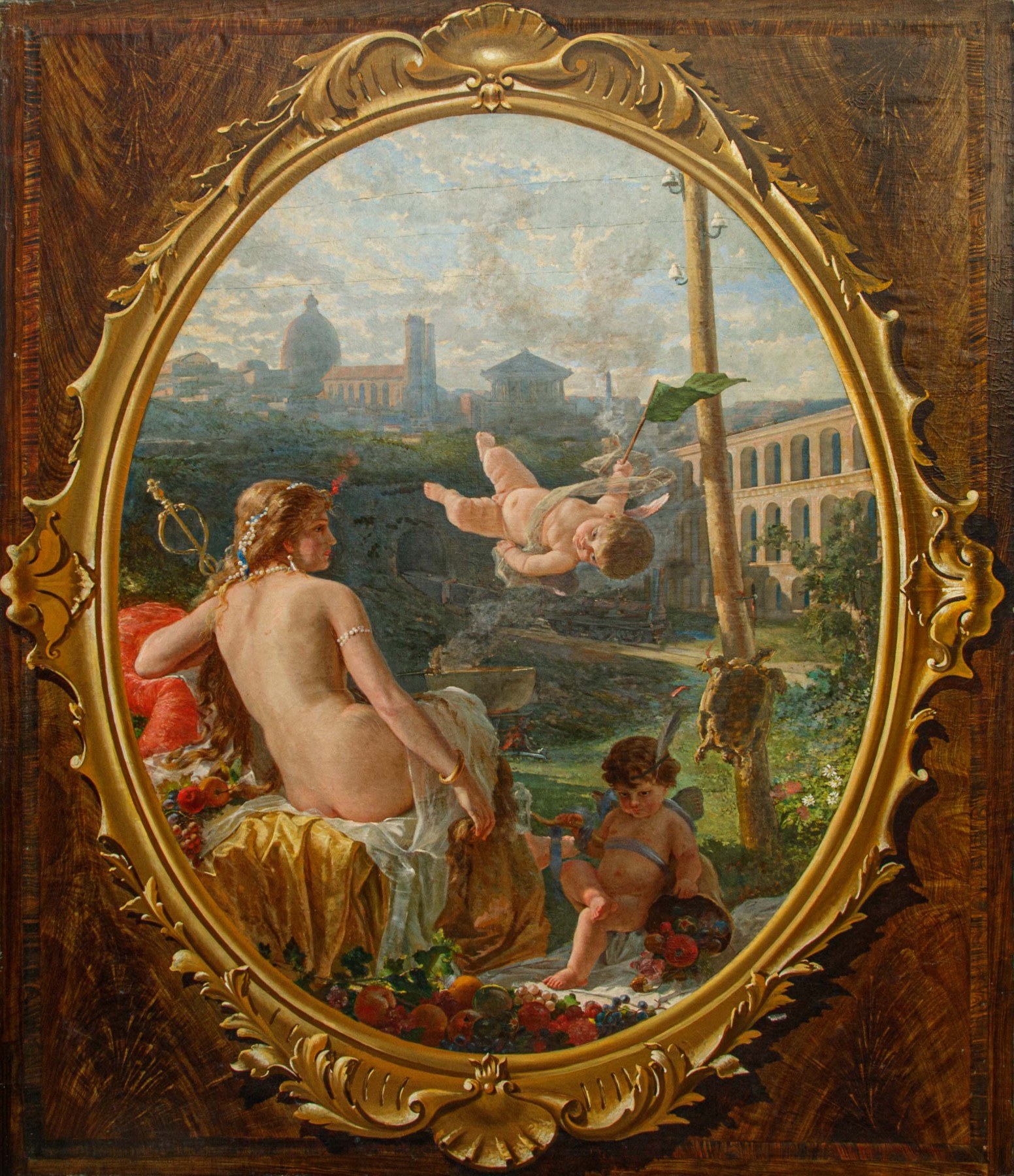
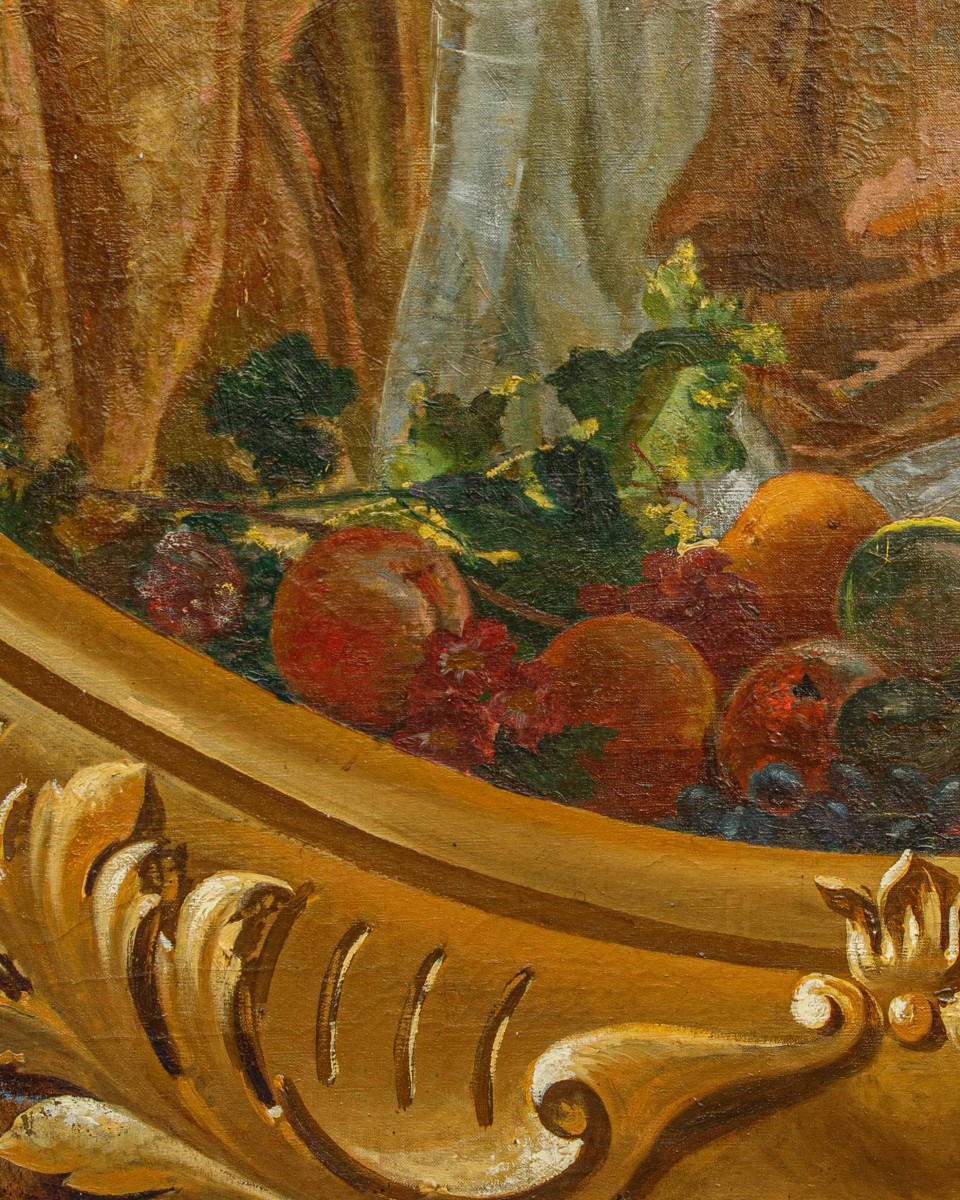
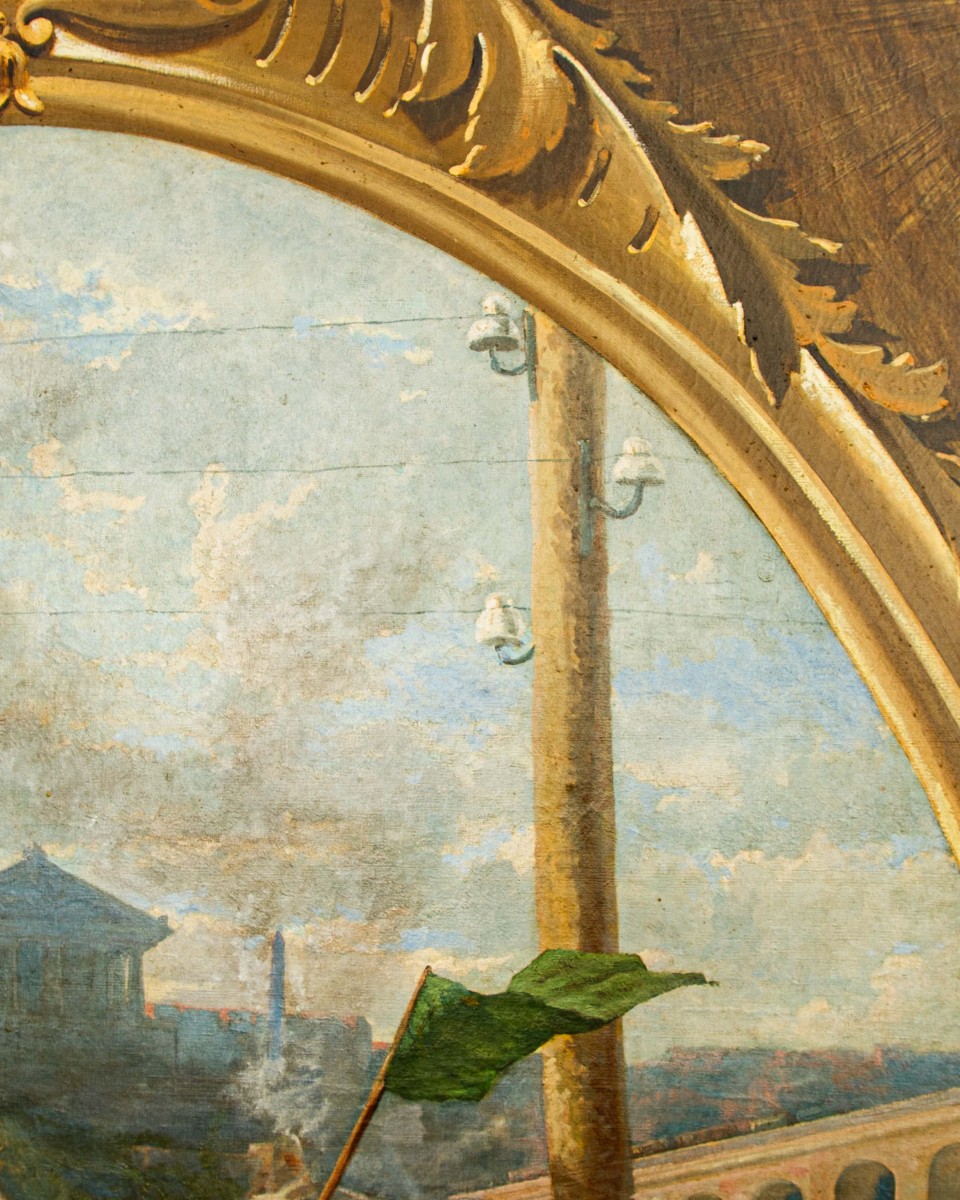
The painting presents itself as an ambitious allegorical composition framed within a gilded oval border painted en trompe-l'œil against a background imitating walnut wood—a refined decorative device alluding to the grand tradition of mural and salon painting characteristic of French public commissions. The work almost certainly dates to the very first years of the 20th century, most likely to 1900, the year of the Paris Exposition Universelle—an event that established electricity as the quintessential symbol of modernity.
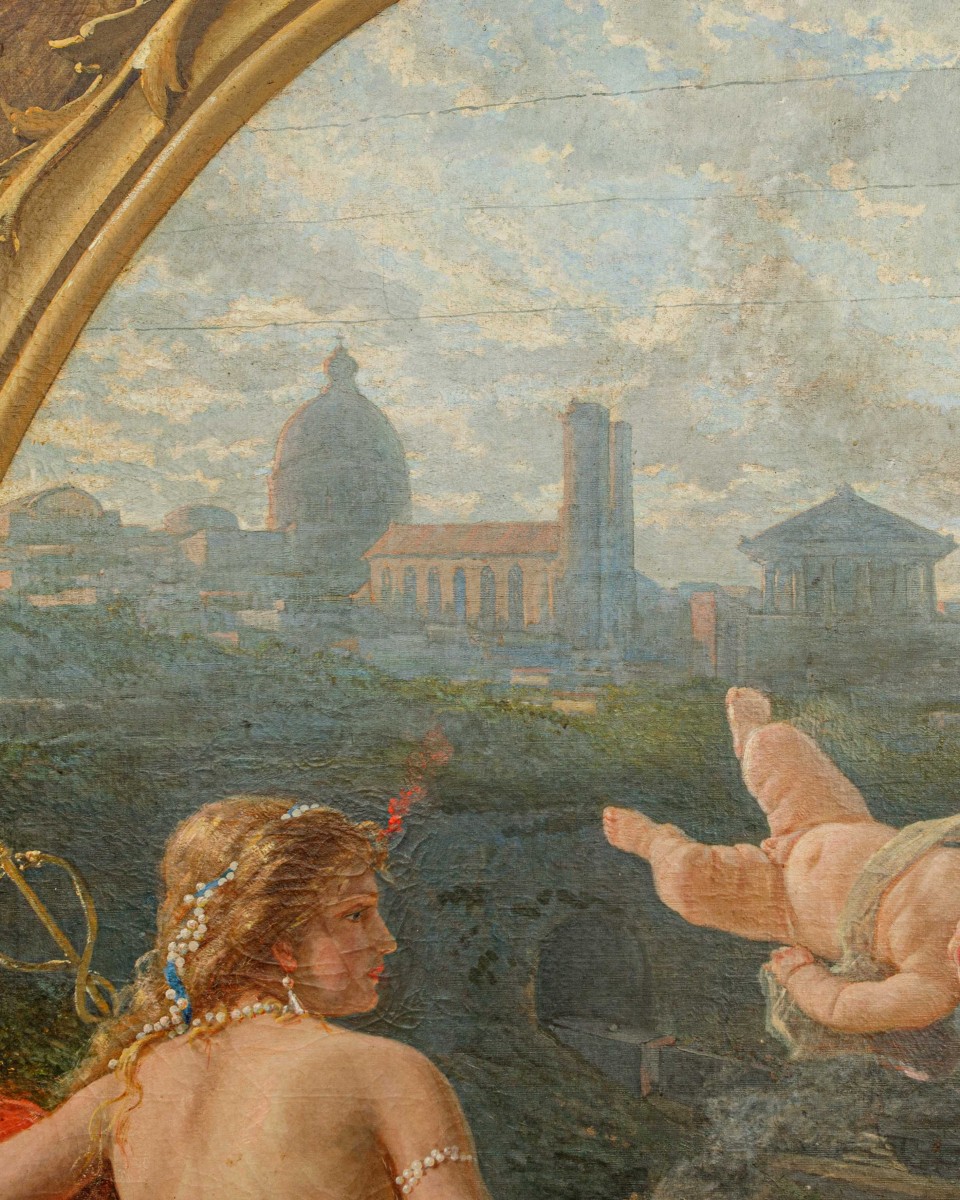
In this context, the presence on the right side of the composition of a telegraph or electric pole, complete with its ceramic insulators and stretched wires, is by no means accidental: it is a detail of striking topicality, referring directly to the long-distance transmission of electric current then being showcased to a global audience.
The iconographic structure intertwines classical mythology with the aspirations of positivist ...
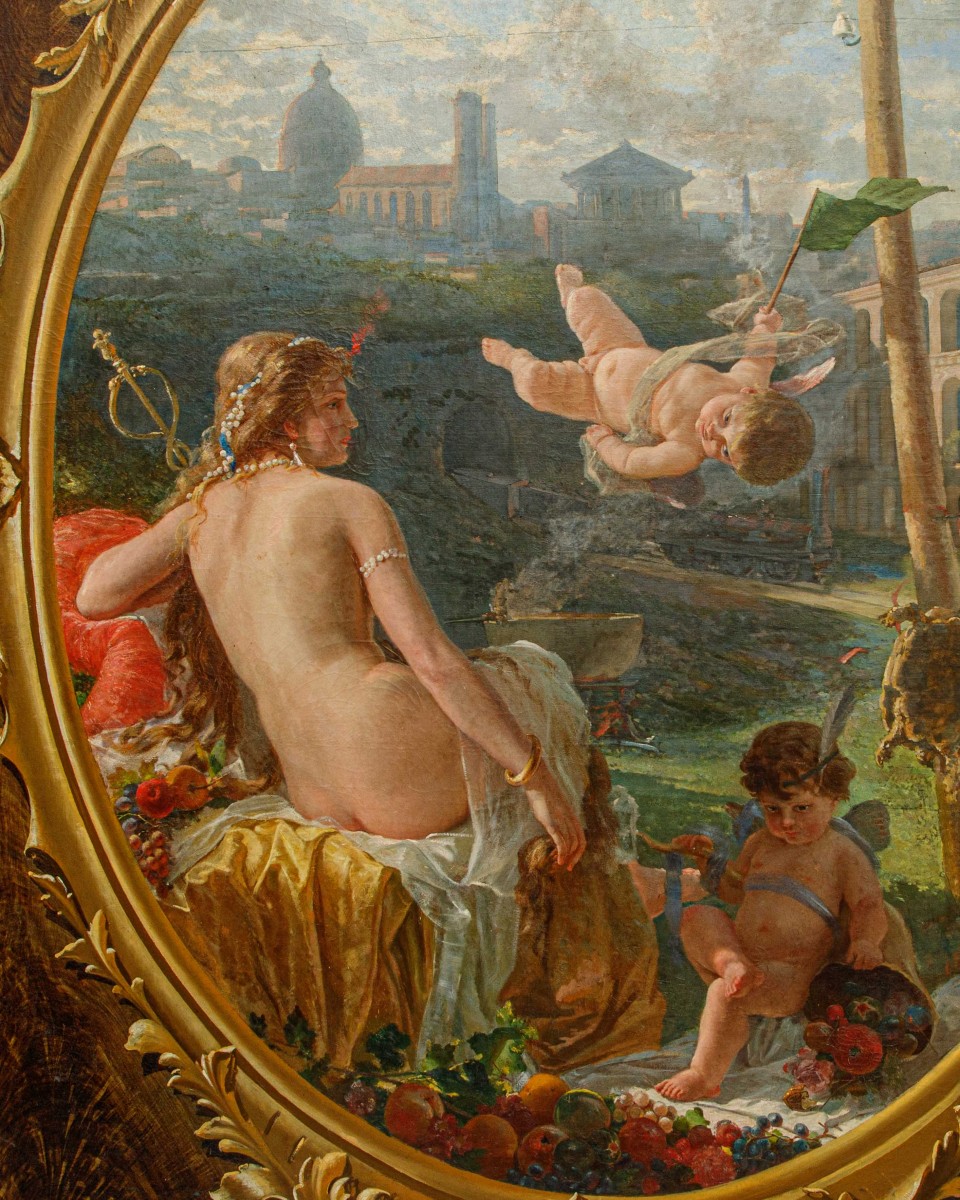
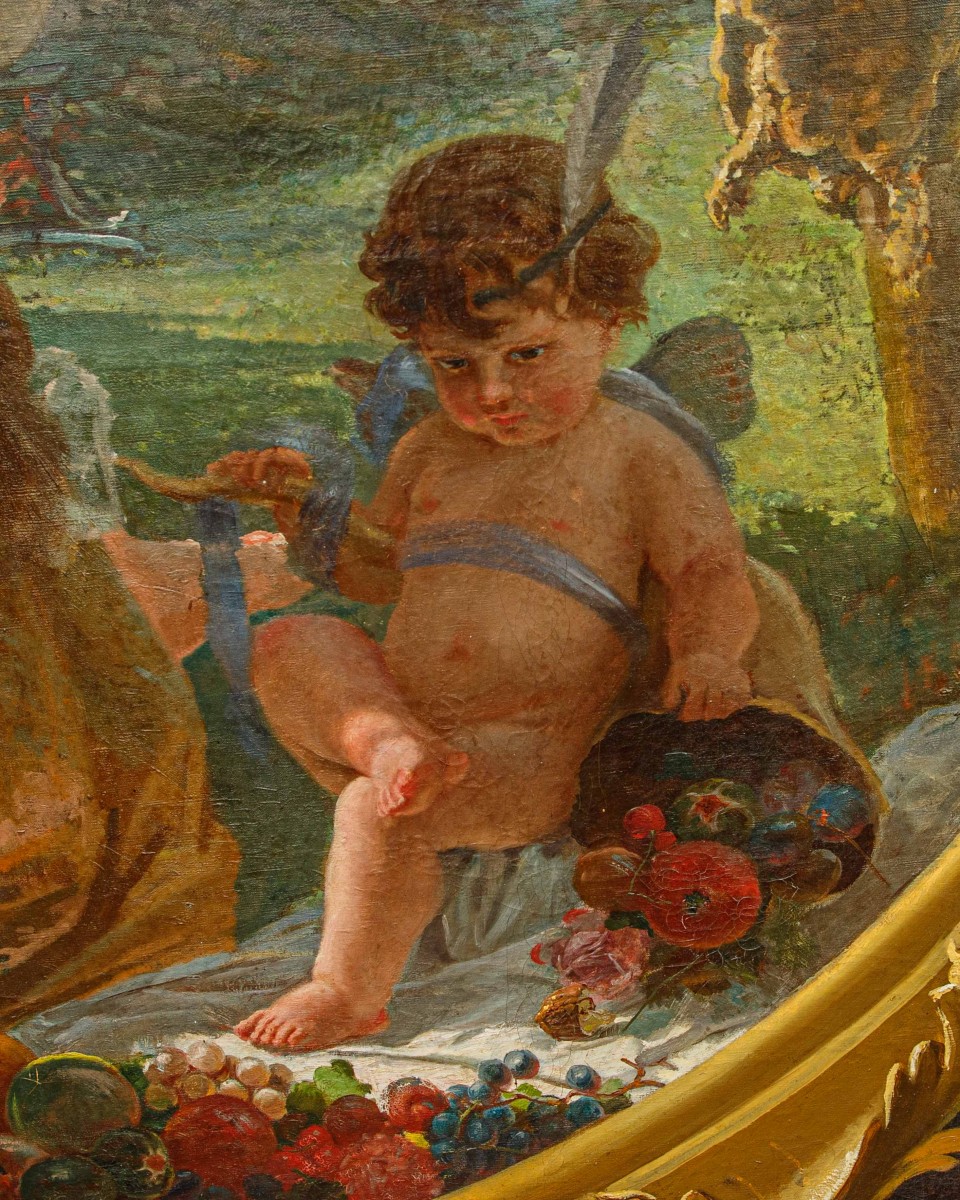
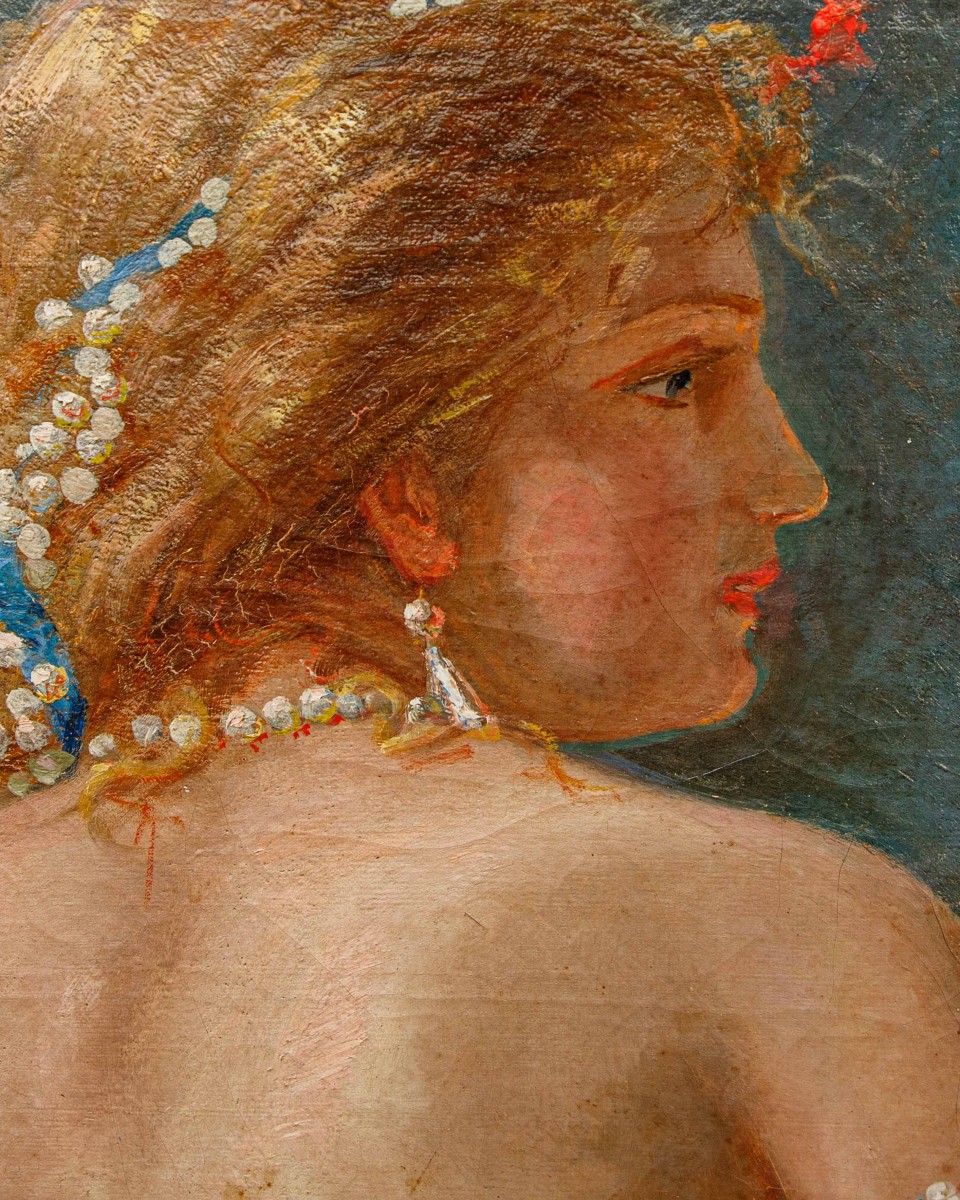
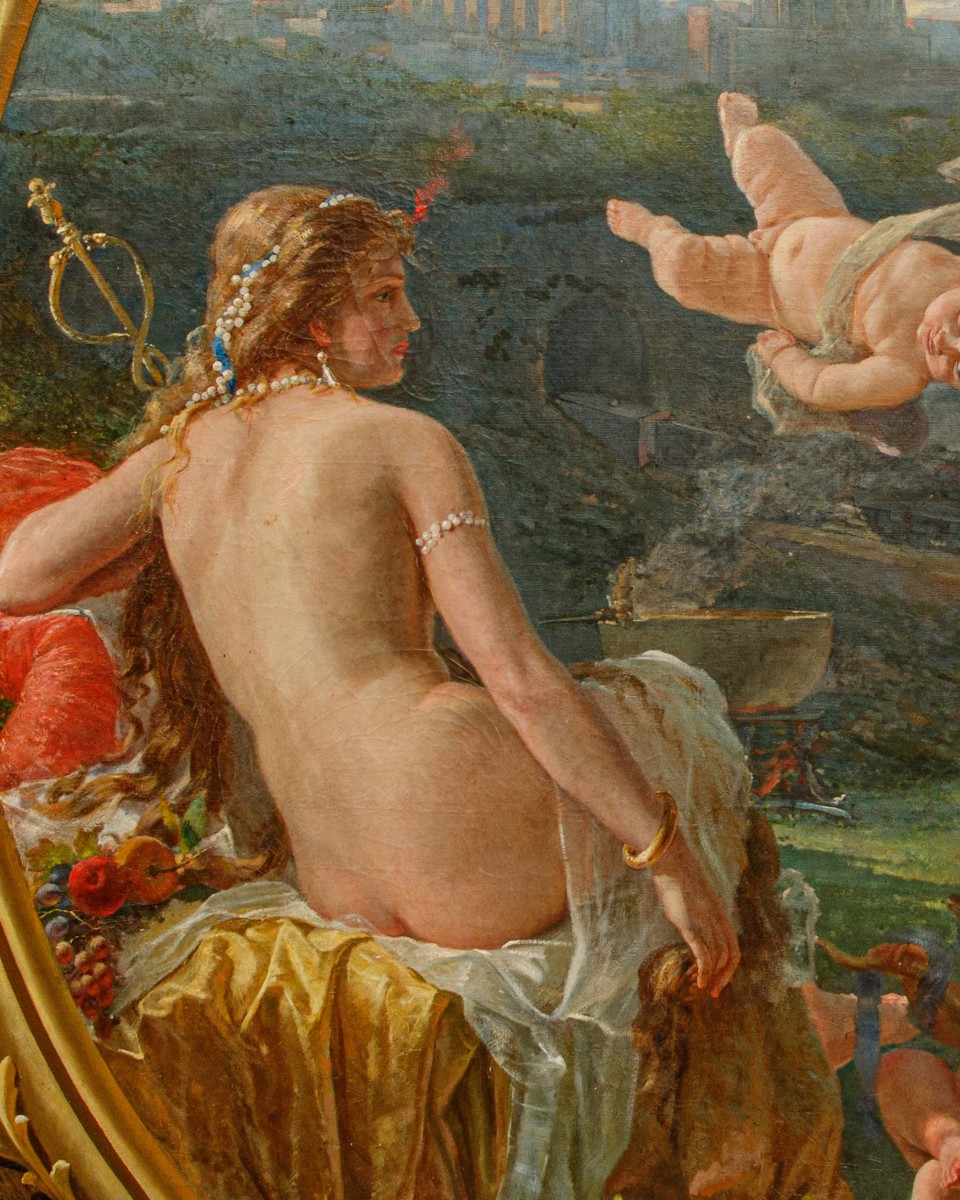
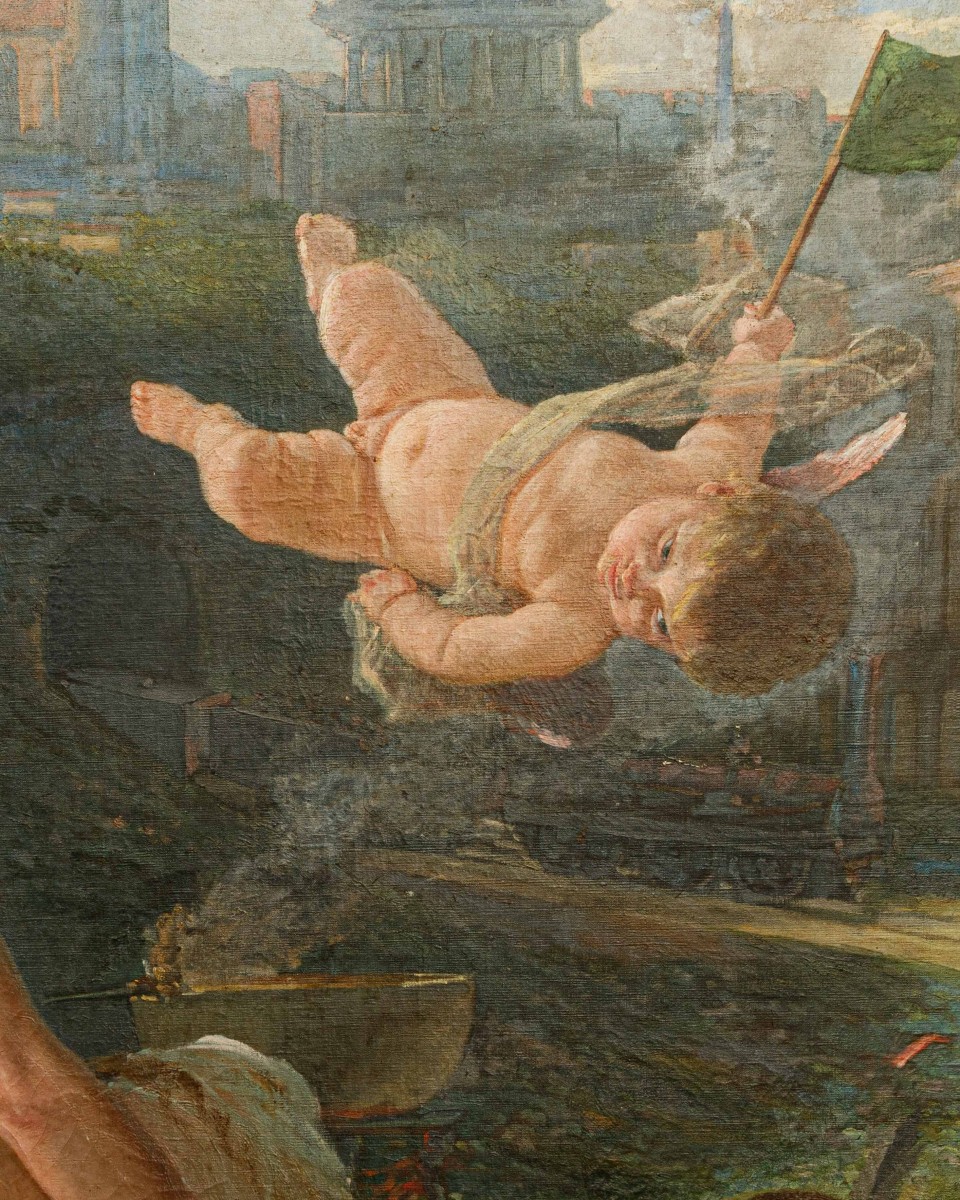
... modernity. At the center-left, viewed from behind, sits a female nude adorned with pearls, golden bracelets, and a floral wreath in her red hair, draped in white and gold fabrics and surrounded by a profusion of fruits and flowers. Beside her, a seated winged putto holds a cornucopia overflowing with fruit. Floating in mid-air at the center of the scene, another putto leaps forward holding a small green flag, as if guiding the viewer's gaze toward the future. Suspended from the electric pole, a tortoise—an ancient Hermetic emblem—is here recontextualized to signify the end of slow-paced eras.
In the background, several iconic Parisian landmarks are recognizable: the Church of La Madeleine, the Hôtel des Invalides, and the Palais du Trocadéro. In the distance, amidst steam and mist, a speeding steam locomotive can be discerned; its smoke merges with the clouds of the blue sky, transforming the bucolic landscape into a kinetic one where nature and industry coexist in programmatic harmony.
The color palette is bright and warm in the rendering of flesh tones and drapery, while the background opens up to cerulean, metallic, and smoky hues. The chiaroscuro is executed with academic confidence, and the treatment of volumes reveals solid classical training.
The work belongs firmly to the tradition of late 19th-century French Academic Naturalism and Institutional Symbolism. Rather than merely depicting a machine or an infrastructure, it apotheosizes the very concept of progress, elevating electricity, steam, and international trade to the status of new myths for the modern age. The grace of the female figure juxtaposed with the power of industrial infrastructure embodies the ideal promoted by the French Third Republic: a harmonious union between Art and Technology, classical heritage and mechanized civilization. This painting stands as a historical and cultural document of extraordinary interest, capturing with rare visual synthesis the spirit of an era that believed, with naive yet grand confidence, in progress as the ultimate destiny of humanity.6 x 206 cm
Conditions générales de livraison :
Shipping costs will be calculated at checkout based on the destination, dimensions, and weight of the painting, as well as the insurance covering the full value of the artwork.
Pour les peintures achetées de l'étranger : après réception delivrance du paiement, la procédure pour obtenir la licence d'exportation (ALC) sera engagée. Toutes les antiquités envoyées à l'étranger depuis l'Italie nécessitent ce document, délivré par le Ministère de la Culture. La procédure peut nécessiter de 3 à 5 semaines à compter de la demande ; par conséquent, la peinture sera expédiée dès que nous aurons obtenu le document.